
The Toyota Corolla cargo space is an important consideration for anyone shopping for a practical compact car. Whether you regularly carry groceries, travel with luggage, transport sports equipment, or simply need enough room for everyday essentials, knowing how much storage the Corolla offers can help you decide if it suits your lifestyle.
Toyota offers the Corolla in different body styles, including the traditional sedan and hatchback, with hybrid versions also available in certain markets. Each configuration has its own storage characteristics, so choosing the right one can make a noticeable difference in everyday convenience.
This guide explores Toyota Corolla trunk capacity, compares sedan and hatchback storage, explains how the hybrid model affects cargo practicality, and looks at what you can realistically fit inside. You’ll also learn which configuration makes the most sense for commuting, shopping, family activities, and longer road trips.
In This Article
How Much Cargo Space Does the Toyota Corolla Actually Offer?
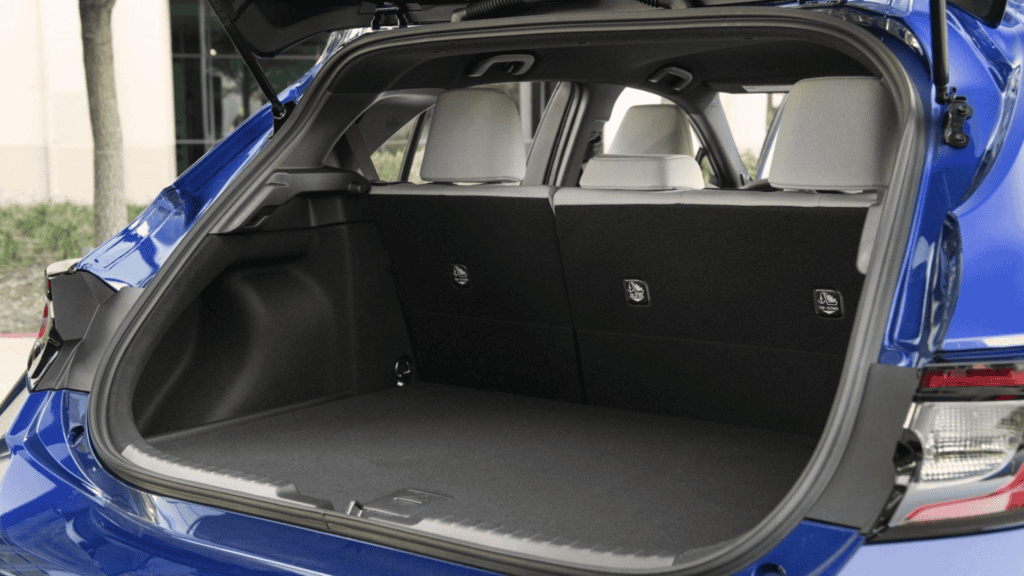
The Toyota Corolla provides a practical amount of storage for a compact car, although its cargo capacity depends on the body style and model year. The sedan offers a conventional enclosed trunk, while the hatchback provides a taller cargo opening and a more flexible storage area.
For a clear reference, the 2025 Toyota Corolla lineup sold in the United States offers the following published cargo capacities:
| Toyota Corolla Model | Cargo Capacity |
| Corolla Sedan | 13.1 cubic feet |
| Corolla Hybrid Sedan | 13.1 cubic feet |
| Corolla Hatchback | 17.8 cubic feet |
Specifications refer to the 2025 U.S.-market models. Figures may differ in other countries and model years.
These numbers provide a useful starting point, but they don’t tell the entire story. Cargo volume measures the available storage area, not necessarily how easily you can load a large suitcase, stroller, or bulky shopping item.
Toyota Corolla Sedan Trunk Capacity: How Much Can You Carry?
The 2025 Toyota Corolla Sedan offers 13.1 cubic feet of trunk space, equivalent to approximately 371 liters. This gives drivers a reasonably useful storage compartment for daily activities without making the vehicle unnecessarily large.
The enclosed trunk is particularly convenient because it keeps belongings out of direct view. Groceries, backpacks, briefcases, small travel bags, and other personal items can be stored separately from the passenger cabin.
The trunk’s traditional design also makes it suitable for carrying items that benefit from protection against rain, dust, and outside visibility.
Some practical uses include:
- Carrying several grocery bags after a weekly shopping trip.
- Storing backpacks, handbags, and work equipment.
- Transporting small and medium-sized suitcases.
- Keeping emergency supplies and vehicle accessories organized.
- Carrying luggage for short weekend trips.
One limitation is the sedan’s relatively narrow trunk opening compared with a hatchback. Even when an item appears small enough to fit based on its overall dimensions, its shape may make loading more difficult.
The key advantage of the Corolla Sedan is its enclosed storage area. It provides practical everyday capacity while keeping luggage and personal belongings separate from the passenger compartment.
Toyota Corolla Hatchback Cargo Capacity: More Flexible Storage
Drivers who need additional flexibility may prefer the Toyota Corolla Hatchback. The 2025 U.S.-market model provides 17.8 cubic feet of cargo volume, making it larger in published cargo capacity than the sedan.
The biggest difference isn’t simply the additional volume. Its rear hatch opens upward, creating a wider and taller loading area that makes it easier to place certain bulky objects inside.
The hatchback’s rear seats also fold flat, allowing the cargo area to accommodate longer items when additional passenger seating isn’t needed.
This configuration is useful for people who regularly transport:
- Larger shopping bags and household supplies.
- Sports equipment and recreational gear.
- Weekend travel luggage.
- Foldable chairs and small outdoor equipment.
- Longer packages that require additional loading flexibility.
The hatchback’s design makes loading and unloading more convenient, particularly when carrying objects that would be difficult to maneuver through a conventional sedan trunk opening.
However, cargo capacity isn’t the only consideration. The Corolla Hatchback has a different passenger-space layout, including less rear legroom than the sedan in the 2025 U.S. lineup. Buyers who frequently travel with adult rear passengers should consider this difference.
Choose the Corolla Hatchback if flexible storage and easier access matter more than having a traditional enclosed trunk.
Toyota Corolla Hybrid Trunk Space: Does the Battery Reduce Storage?
One common question among hybrid car shoppers is whether the battery system takes up valuable luggage space.
The good news is that the 2025 Toyota Corolla Hybrid Sedan retains the same published 13.1 cubic feet of cargo capacity as the standard gasoline Corolla Sedan.
Toyota’s hybrid system combines a gasoline engine with electric motor assistance to improve fuel efficiency. The battery and associated components are integrated into the vehicle’s design rather than requiring a large portion of the passenger cabin or trunk.
This means buyers can enjoy the fuel-saving advantages of hybrid technology without sacrificing the sedan’s published trunk volume.
The Corolla Hybrid is particularly appealing to drivers who spend considerable time commuting, navigating urban traffic, or traveling longer distances.
Its advantages include:
- Excellent fuel efficiency compared with many conventional gasoline-powered compact sedans.
- A conventional trunk layout with useful everyday storage.
- Smooth transitions between gasoline and electric power.
- Reduced fuel consumption in stop-and-go driving conditions.
The 2025 U.S.-market Corolla Hybrid also offers an EPA-estimated combined fuel economy of up to 50 mpg in certain configurations, although the actual figure depends on the trim and drivetrain.
One detail worth checking is the spare-tire arrangement. Certain hybrid configurations use a tire repair kit rather than a conventional spare tire, which can affect how the storage compartment is organized.
For buyers who want better fuel economy without giving up sedan-style trunk capacity, the Corolla Hybrid is a practical option.
Understanding Toyota Corolla Cargo Measurements
Cargo volume is useful when comparing vehicles, but it doesn’t always represent the amount of usable space available for every type of luggage.
Two vehicles can have similar published cargo capacities while offering noticeably different loading experiences. The shape of the storage compartment, opening height, floor arrangement, and position of the rear seats all influence practicality.
Here are several measurements and design features worth understanding:
| Measurement or Feature | Why It Matters |
| Cargo volume | Indicates the overall rated storage capacity |
| Trunk opening width | Determines how easily wider objects can enter |
| Loading height | Affects the effort required to lift heavy luggage |
| Cargo floor length | Helps determine whether longer objects will fit |
| Cargo floor height | Influences available vertical storage |
| Rear seat folding | Creates additional room for longer items |
A sedan may have enough total volume for several suitcases but still struggle with an unusually wide box. A hatchback might offer easier access to bulky objects even when its cargo floor isn’t particularly long.
It’s also important to distinguish between cargo capacity and passenger volume. The Corolla’s passenger compartment measurements describe the space available for occupants, not additional luggage capacity.
A useful buying tip: If you regularly transport specific items, measure their length, width, and height before visiting a dealership. Bring those measurements when checking the vehicle rather than relying entirely on the published cubic-foot figure.
How Model Year and Body Style Affect Toyota Corolla Cargo Space
Toyota Corolla cargo capacity isn’t identical across every generation or international market.
Changes to the vehicle’s platform, suspension, battery packaging, body design, and interior layout can influence the available storage area. Even vehicles carrying the same Corolla name can have different dimensions depending on where they are sold.
For example, the U.S.-market 2025 Corolla Sedan and Corolla Hybrid Sedan both list 13.1 cubic feet of cargo volume, while the Corolla Hatchback lists 17.8 cubic feet.
Older Corolla generations may have different trunk dimensions, while international versions can use different specifications and body styles.
When comparing model years, pay attention to:
- Body style: Sedan and hatchback models have different cargo layouts.
- Hybrid configuration: Battery placement and spare-tire arrangements may vary.
- Trim level: Equipment and optional features can influence storage arrangements.
- Market specifications: U.S., European, Asian, and other regional versions may differ.
- Rear seat configuration: Folding-seat availability and design can affect cargo flexibility.
If you’re considering a used Corolla, check the official specifications for its exact model year and market. Don’t assume that a newer vehicle automatically offers more trunk space than an older one.
Toyota Corolla Cargo Space by Model: Sedan vs. Hatchback vs. Hybrid
Choosing between Corolla versions involves more than comparing engine performance and fuel economy. The body style determines how you access the storage area, how easily you can carry bulky belongings, and how much flexibility you have when traveling with passengers.
The sedan, hatchback, and hybrid versions each serve slightly different needs.
Toyota Corolla Sedan vs. Hatchback: Which Offers More Practical Storage?
The Corolla Sedan and Corolla Hatchback have different approaches to cargo storage.
The sedan focuses on a traditional trunk with a separate passenger compartment. The hatchback combines the rear storage area with the passenger cabin through an opening liftgate.
Here’s how their published specifications compare:
| Feature | Corolla Sedan | Corolla Hatchback |
| Cargo capacity | 13.1 cu. ft. | 17.8 cu. ft. |
| Approximate capacity in liters | 371 L | 504 L |
| Rear access | Conventional trunk lid | Large liftgate |
| Rear seat folding | Available, configuration-dependent | Fold-flat rear seats |
| Storage design | Enclosed trunk | Flexible cargo compartment |
| Best suited for | Everyday luggage and groceries | Bulky items and flexible loading |
The hatchback provides approximately 4.7 cubic feet more published cargo capacity, which is a meaningful difference for drivers who frequently carry luggage or shopping supplies.
Its liftgate also makes it easier to load items that are awkward to maneuver through a sedan’s trunk opening.
The sedan still has advantages. Its separate trunk keeps luggage away from the passenger compartment, and its layout may appeal to drivers who prefer a conventional family car.
Which one should you choose?
- Choose the Corolla Sedan if you prioritize a traditional trunk, passenger comfort, and everyday commuting.
- Choose the Corolla Hatchback if you frequently carry larger objects and want easier access to the storage compartment.
Neither is automatically better. The right choice depends on what you carry most often.
Toyota Corolla Hybrid vs. Gasoline Model: Differences in Trunk Dimensions
The Corolla Hybrid is an interesting option because it combines improved fuel efficiency with the familiar practicality of the Corolla Sedan.
For the 2025 U.S. lineup, Toyota lists the same 13.1-cubic-foot cargo capacity for gasoline and hybrid sedan versions.
| Feature | Corolla Gasoline Sedan | Corolla Hybrid Sedan |
| Cargo capacity | 13.1 cu. ft. | 13.1 cu. ft. |
| Powertrain | 2.0-liter gasoline engine | 1.8-liter hybrid system |
| Transmission | CVT | Electronically controlled CVT |
| Fuel economy | Up to 35 mpg combined | Up to 50 mpg combined |
| Seating capacity | 5 | 5 |
| Main advantage | Conventional gasoline powertrain | Improved fuel efficiency |
Fuel economy figures are 2025 U.S. EPA estimates and vary by configuration.
The hybrid’s main benefit is lower fuel consumption, particularly in urban driving where regenerative braking and electric motor assistance can help improve efficiency.
From a cargo perspective, however, there is no published capacity advantage for either sedan configuration.
Buyers should also check whether the particular vehicle includes a spare tire or tire repair kit. That equipment can influence the storage arrangement beneath the trunk floor.
Cargo Space Across Recent Toyota Corolla Model Years
Comparing different model years is especially important when shopping for a used Corolla.
A vehicle’s exterior dimensions might look similar across generations, but changes to the body structure and interior packaging can affect its usable storage area.
The following table provides a reference for recent U.S.-market models:
| Model | Published Cargo Capacity |
| 2025 Corolla Sedan | 13.1 cu. ft. |
| 2025 Corolla Hybrid Sedan | 13.1 cu. ft. |
| 2025 Corolla Hatchback | 17.8 cu. ft. |
These figures are useful for comparing the three configurations, but they shouldn’t be applied automatically to every previous model year.
When evaluating an older Corolla, check the manufacturer’s specifications for that specific year. This is particularly important if you’re comparing a used sedan with a newer hatchback or hybrid.
Rear Seat Folding: Creating More Room for Larger Items
The ability to fold the rear seats can make a significant difference when carrying longer belongings.
The Corolla Hatchback features fold-flat rear seats, giving owners additional flexibility when the regular cargo compartment isn’t large enough.
This arrangement can be useful for carrying:
- Long packages and flat-packed household products.
- Camping equipment and outdoor supplies.
- Sports equipment that doesn’t fit comfortably in the standard cargo area.
- Larger shopping purchases.
- Travel bags when additional passenger seating isn’t required.
The Corolla Sedan also offers rear-seat folding on applicable configurations, although the available opening and loading arrangement differ from the hatchback.
Remember that folding the seats doesn’t turn the Corolla into a full-size cargo vehicle. The available floor area, roof height, and rear opening still limit what can be transported.
Always check the actual dimensions before purchasing or transporting particularly large objects.
Which Corolla Configuration Offers the Best Balance?
The best Corolla configuration depends on how frequently you use the rear storage area and whether passenger comfort or cargo flexibility is more important.
The sedan is a sensible choice for commuters and small families who mostly carry groceries, backpacks, and travel luggage.
The hatchback makes more sense for drivers who regularly transport bulky belongings, outdoor equipment, or irregularly shaped packages.
The hybrid sedan is particularly attractive to people who want to reduce fuel expenses without giving up the conventional Corolla trunk layout.
The most important consideration is not simply the largest cargo-volume number. It’s how easily the vehicle accommodates the things you actually carry.
What Fits Inside a Toyota Corolla Trunk? Real-World Cargo Tests
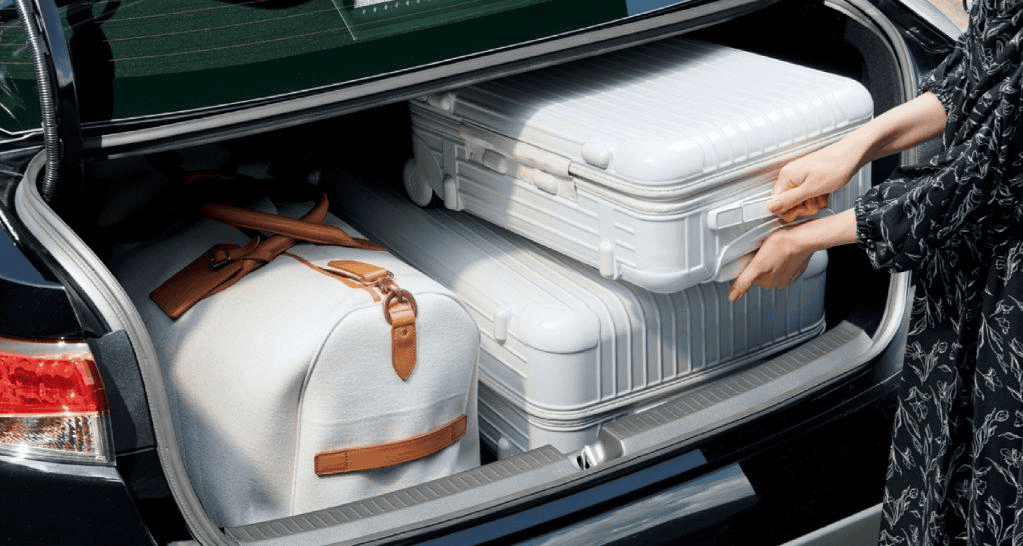
Published cargo measurements are useful, but most drivers don’t think about their luggage in cubic feet. They want to know whether their suitcases will fit before heading to the airport or whether there’s enough room for a full grocery shopping trip.
The Toyota Corolla is designed for everyday practicality, but its compact dimensions mean that loading bulky objects requires some planning.
Understanding the shape and arrangement of your belongings can help you make better use of the available space.
How Many Suitcases Can Fit Inside a Toyota Corolla?
The Corolla Sedan’s 13.1-cubic-foot trunk can accommodate everyday travel luggage, although the exact number of suitcases depends on their dimensions.
Small carry-on suitcases are generally easier to arrange than large hard-shell luggage because they can be positioned more flexibly.
A practical packing approach includes:
- Placing larger suitcases at the bottom of the trunk.
- Positioning smaller travel bags around the larger luggage.
- Using soft-sided bags to fill irregular gaps.
- Keeping fragile belongings away from heavier items.
- Avoiding excessive stacking that could damage luggage.
The Corolla Hatchback offers 17.8 cubic feet of published cargo volume, but its wider rear opening and taller storage arrangement can be just as important as the additional capacity.
The hatchback may be more convenient when loading luggage with unusual shapes or dimensions.
For frequent airport trips, consider the number of passengers traveling with you. Four people carrying individual suitcases require a different storage arrangement than two people traveling with several large bags.
Can the Toyota Corolla Carry Groceries and Shopping Bags?
Grocery shopping is one of the most common situations where trunk practicality matters.
The Corolla Sedan offers enough room for ordinary shopping trips, including grocery bags, bottled drinks, household supplies, and smaller shopping boxes.
The main challenge is keeping everything organized during the drive.
Loose grocery bags can tip over when the vehicle accelerates, brakes, or turns. Heavy items should be placed low in the trunk, while lighter and more delicate products can be positioned above them.
Here are some useful packing suggestions:
- Place heavier grocery bags near the back of the trunk floor.
- Keep eggs, bread, and other delicate products away from heavy items.
- Use reusable shopping crates to prevent bags from moving around.
- Separate cleaning products from groceries.
- Avoid stacking items too high if they could become unstable.
The Corolla Hatchback provides an alternative for drivers who regularly purchase larger household items. Its rear opening makes it easier to load boxes and shopping supplies that might be difficult to fit through the sedan’s trunk opening.
Will a Stroller, Golf Bag, or Sports Equipment Fit?
Bulky everyday items are more challenging than groceries or small travel bags.
A folded stroller, golf bag, or sports equipment may fit inside the Corolla, but the result depends heavily on the object’s dimensions and shape.
Baby strollers: Compact folding strollers are more likely to fit in the sedan’s trunk. Larger travel systems and jogging strollers may require folding or removing certain components.
Golf bags: A standard golf bag may fit diagonally in some configurations, but longer bags and bulky cart bags can be difficult to accommodate alongside other belongings.
Sports equipment: Smaller equipment such as helmets, balls, gym bags, and folded exercise accessories should be relatively easy to transport. Longer equipment may require the rear seats to be folded.
Musical equipment: Small instrument cases and portable audio equipment can fit, while larger cases may require additional cabin space.
The hatchback is generally the more flexible choice for these situations because of its larger rear opening and fold-flat rear seats.
Before buying, measure your largest regular item and test it inside the vehicle. This simple step can prevent disappointment later.
Carrying Camping Gear and Luggage for Weekend Road Trips
The Corolla can serve as a practical weekend travel vehicle for individuals, couples, and small families who pack efficiently.
A typical weekend trip might involve:
- Two medium-sized suitcases.
- A backpack for personal belongings.
- A small cooler.
- Foldable outdoor chairs.
- A compact camping tent.
- Basic travel accessories.
The sedan’s enclosed trunk works well for conventional luggage, while the hatchback offers more flexibility when combining suitcases with irregularly shaped equipment.
Packing efficiently is particularly important when traveling with several passengers. Leaving enough room for everyone to sit comfortably should take priority over carrying unnecessary belongings.
Heavy camping equipment should be positioned securely and as low as practical. Avoid placing loose objects where they could move forward during sudden braking.
Loading Larger or Awkwardly Shaped Items
Not every item is easy to transport in a compact car.
Flat-packed furniture, large cardboard boxes, household appliances, and long packages can present challenges even when their total volume seems relatively small.
The Corolla Hatchback has an advantage when loading these objects because its rear liftgate creates a larger access opening.
The sedan’s trunk is more restrictive because items must pass through a smaller opening before being positioned inside.
Before transporting a large object, consider these factors:
- Measure the item’s longest dimension.
- Check its width and height.
- Measure the trunk or hatch opening.
- Account for the available loading depth.
- Check whether the rear seats can be folded.
- Make sure the object can be secured safely during travel.
Never force an object through the opening or allow it to obstruct the driver’s visibility.
A useful rule: If an item barely fits when the vehicle is stationary, it may not be safe or practical to transport once the vehicle is moving.
Toyota Corolla Cargo Space: Interior Storage and Smart Ways to Maximize It
The Toyota Corolla offers more storage options than just its trunk or rear cargo compartment. Small interior compartments, door pockets, a center console, and rear seat storage areas help keep everyday belongings organized.
Although these spaces aren’t designed to replace the main cargo area, they make a difference during daily commuting, shopping, and longer journeys.
Knowing how to use these storage areas effectively can make the Corolla feel more practical without requiring a larger vehicle.
Hidden Storage Areas and Useful Interior Compartments
The Corolla’s cabin includes several convenient storage locations for personal belongings and smaller everyday items.
Depending on the model year and trim, available storage areas may include:
- Center console compartment: Useful for storing wallets, charging cables, sunglasses, and other small accessories.
- Glove compartment: Provides a convenient place for vehicle documents, manuals, and small personal items.
- Front door pockets: Suitable for water bottles, small umbrellas, and frequently used belongings.
- Rear door pockets: Give rear passengers additional space for smaller items.
- Cupholders: Keep drinks secure and reduce clutter around the center console.
- Seatback pockets: Available on applicable configurations for storing documents, tablets, and lightweight personal items.
These compartments help keep frequently used items within reach instead of placing everything in the trunk.
The center console is particularly useful for drivers who want to keep their cabin organized. Rather than allowing charging cables, receipts, and small accessories to move around, you can store them in one convenient location.
Rear passengers also benefit from additional storage areas, especially during longer journeys.
Rear Seat Folding: How to Create Additional Cargo Room
One of the easiest ways to increase the Corolla’s carrying flexibility is by folding the rear seats.
The available folding arrangement depends on the body style, model year, and trim. Many Corolla configurations offer split-folding rear seatbacks, allowing owners to expand the cargo area while retaining some rear passenger seating.
This feature is especially helpful when transporting longer objects that cannot fit entirely inside the standard trunk or cargo compartment.
For example, you might fold one side of the rear seat to accommodate a long package while keeping the other side available for a passenger.
The Corolla Hatchback is particularly practical in this situation because its rear seats fold down to create a larger, more accessible cargo area.
Before loading anything, keep these points in mind:
- Check the owner’s manual for the correct rear-seat folding procedure.
- Remove objects from the seats before folding them.
- Make sure the seatbacks lock securely when returned to their upright position.
- Avoid placing heavy objects where they can damage the interior trim.
- Keep the driver’s visibility and access to essential controls unobstructed.
Remember that folding the rear seats doesn’t automatically increase the vehicle’s permitted payload. The combined weight of passengers, luggage, and other belongings must remain within the manufacturer’s specified limits.
Using Trunk Organizers, Storage Bins, and Collapsible Containers
A spacious trunk can quickly become messy when groceries, travel accessories, emergency supplies, and personal belongings are stored together.
A trunk organizer is a simple solution that helps separate different types of items.
For the Corolla Sedan, a compact organizer can make better use of the available 13.1 cubic feet without permanently taking up too much room.
Useful accessories include:
- Foldable trunk organizers: Keep groceries, cleaning supplies, and emergency equipment separated.
- Collapsible storage bins: Provide temporary organization when carrying several small items.
- Non-slip cargo mats: Help prevent bags and boxes from sliding around.
- Small storage pouches: Keep tools, cables, and vehicle accessories together.
- Luggage straps: Help secure suitcases and heavier belongings.
The Corolla Hatchback can benefit from these accessories too, particularly when its rear seats are folded and the cargo area is being used for different types of equipment.
Choose organizers that fit the available floor dimensions. Oversized storage boxes can reduce usable cargo capacity rather than improve it.
Protecting the Trunk With Cargo Mats and Liners
The trunk floor is exposed to dirt, moisture, spills, and everyday wear. Over time, grocery bags, muddy equipment, and luggage can leave stains or scratches.
A properly fitted cargo mat helps protect the original carpeting and makes cleaning easier.
For everyday ownership, consider these options:
All-weather cargo mats: Usually made from rubber or similar materials, these are useful for drivers who regularly carry muddy shoes, wet equipment, or gardening supplies.
Carpeted trunk mats: These offer a more factory-like appearance and can help protect the original trunk carpeting from ordinary wear.
Raised-edge cargo liners: Their raised borders help contain minor spills and dirt before they spread across the surrounding carpet.
When choosing an accessory, check that it is designed for your exact Corolla model year and body style. Sedan and hatchback cargo floors have different shapes, so their mats are not necessarily interchangeable.
A properly fitted mat should also avoid interfering with the spare tire access panel, storage compartments, or other important equipment.
Packing Strategies to Make the Most of Limited Trunk Space
Good packing habits can make a noticeable difference, especially when traveling with several passengers.
Instead of simply placing everything inside the trunk, arrange belongings according to their size, weight, and frequency of use.
Try these practical techniques:
- Put large suitcases and heavier bags at the bottom.
- Place smaller bags in the gaps between larger items.
- Use soft-sided luggage when possible because it can fit around irregular spaces.
- Keep frequently needed belongings near the top.
- Separate fragile items from heavy equipment.
- Avoid stacking luggage above the safe storage area or where it could obstruct visibility.
- Leave enough room to access essential equipment.
For road trips, packing cubes can also help reduce wasted space inside suitcases.
Another useful approach is to organize luggage by purpose. Keep overnight essentials together, separate emergency equipment, and place items needed during the journey where they are easy to reach.
The goal isn’t to fill every available inch of the trunk. It’s to carry everything you need while keeping the load organized and secure.
Understanding Weight Limits and Safe Cargo Distribution
Cargo capacity isn’t only about physical space. Every Toyota Corolla also has a maximum permitted vehicle weight that includes passengers, luggage, and additional equipment.
Filling the trunk with heavy objects without considering the vehicle’s weight limits can affect braking, handling, tire performance, and overall safety.
Before loading particularly heavy belongings, check the vehicle’s certification label and owner’s manual.
Pay attention to:
- Maximum vehicle weight.
- Front and rear axle weight ratings.
- Tire load ratings and recommended tire pressures.
- Proper positioning of heavy luggage.
- Secure storage of loose objects.
Heavy items should generally be positioned low and secured so they cannot move during acceleration, braking, or cornering.
Avoid placing heavy objects on top of the rear seatbacks or allowing cargo to interfere with the driver’s rear visibility.
The Corolla is designed primarily as a passenger vehicle, so its cargo area should be used within the manufacturer’s stated limits.
Is the Toyota Corolla Big Enough for Your Lifestyle? Practical Comparisons
The Toyota Corolla is a practical compact car, but its storage capacity won’t meet every driver’s needs.
Someone who mainly commutes to work and occasionally travels with luggage may find the Corolla perfectly adequate. A larger family or someone who frequently transports bulky equipment might prefer a vehicle with more cargo flexibility.
Comparing the Corolla with other Toyota models and competing vehicles can help you understand where it fits.
Toyota Corolla Cargo Space vs. Toyota Camry: Which Is Better for Larger Loads?
The Toyota Camry is a larger sedan designed to offer additional passenger comfort and a more spacious overall layout.
Its larger body gives it an advantage for drivers who regularly travel with several passengers or need additional luggage capacity.
For the 2025 U.S.-market lineup, the published specifications are:
| Feature | Toyota Corolla Sedan | Toyota Camry Sedan |
| Cargo capacity | 13.1 cu. ft. | 15.1 cu. ft. |
| Approximate capacity | 371 L | 428 L |
| Vehicle category | Compact sedan | Midsize sedan |
| Passenger space | More compact | More spacious |
| Best suited for | Everyday commuting | Longer trips and additional passenger comfort |
The Camry provides approximately 2 cubic feet more trunk space than the Corolla Sedan.
That difference may not seem substantial on paper, but the Camry’s larger interior can make it more comfortable for families and passengers who frequently travel together.
The Corolla still has important advantages.
Its smaller dimensions make it easier to maneuver and park in crowded urban areas. It also offers a practical balance of passenger accommodation, fuel efficiency, and everyday storage.
Choose the Corolla if you want a compact, economical daily driver. Consider the Camry if additional passenger comfort and a larger overall cabin are higher priorities.
Corolla Sedan vs. Toyota Corolla Cross: Comparing Trunk Practicality
The Toyota Corolla Cross offers a different approach to storage.
Instead of a traditional sedan trunk, the Corolla Cross features an SUV-style rear cargo area with a large liftgate.
This design makes it particularly useful for carrying taller belongings, shopping boxes, outdoor equipment, and luggage that might be difficult to load into a conventional sedan.
The 2025 U.S.-market Corolla Cross offers approximately 24.0 cubic feet of cargo space behind the rear seats in gasoline configurations, with differences depending on the version and measurement specification.
| Feature | Corolla Sedan | Corolla Cross |
| Vehicle type | Compact sedan | Compact SUV |
| Cargo capacity | 13.1 cu. ft. | Approximately 24.0 cu. ft. |
| Rear access | Trunk lid | Large liftgate |
| Cargo height | Lower trunk compartment | Taller cargo area |
| Loading bulky objects | More restrictive | More convenient |
| Driving position | Traditional sedan | Higher SUV seating position |
The Corolla Cross is the more practical choice if you regularly carry bulky belongings or want a taller cargo compartment.
Its SUV layout also makes it easier to load certain objects without having to angle them through a narrow trunk opening.
However, the Corolla Sedan remains attractive for drivers who prefer a lower driving position, traditional sedan styling, and compact dimensions.
The decision comes down to how you use your vehicle. If most of your storage needs involve groceries and ordinary luggage, the Corolla Sedan may be enough. If you regularly transport larger household items, the Corolla Cross deserves consideration.
Toyota Corolla vs. Honda Civic: How Do Their Cargo Capacities Compare?
The Honda Civic is one of the Corolla’s closest competitors.
Both vehicles appeal to drivers looking for dependable compact transportation, practical interiors, and good fuel economy.
However, cargo capacity varies depending on whether you’re comparing sedans or hatchbacks.
For the 2025 U.S. models:
| Feature | Toyota Corolla Sedan | Honda Civic Sedan |
| Cargo capacity | 13.1 cu. ft. | 14.8 cu. ft. |
| Approximate capacity | 371 L | 419 L |
| Body style | Sedan | Sedan |
| Rear seat folding | Configuration-dependent | Split-folding rear seat |
| Main advantage | Compact everyday practicality | Larger published trunk volume |
The Civic Sedan offers approximately 1.7 cubic feet more published trunk capacity than the Corolla Sedan.
That can provide additional flexibility when carrying suitcases, shopping bags, and other everyday belongings.
The comparison becomes different when looking at hatchback versions. The Corolla Hatchback’s published 17.8-cubic-foot cargo capacity is measured using Toyota’s specifications, while competing hatchbacks may use different measurement methods.
For a meaningful comparison, consider the physical dimensions of the cargo opening and floor, not just the headline capacity.
Both vehicles are sensible options, but the best choice depends on which interior layout and driving characteristics you prefer.
Is the Corolla Suitable for Family Vacations and Airport Trips?
The Corolla can handle many family travel situations, especially when passengers pack sensibly.
A small family traveling for a weekend can generally make good use of the sedan’s trunk, while the hatchback offers additional flexibility for luggage and irregularly shaped belongings.
For airport trips, consider the following:
- Number of passengers.
- Number and size of suitcases.
- Additional backpacks or handbags.
- Child seats and stroller requirements.
- Whether passengers need room for personal belongings inside the cabin.
Two adults traveling with a few medium-sized suitcases will have different storage requirements from a family of four carrying several large suitcases.
The Corolla Hatchback may be more convenient for luggage because of its larger cargo opening, although its rear passenger space should also be considered.
Families with young children should pay particular attention to stroller dimensions. A compact folding stroller is considerably easier to accommodate than a large travel system.
For longer vacations, it’s worth testing the actual luggage arrangement before departure rather than discovering that everything doesn’t fit when the vehicle is already packed.
Everyday Commuting, Grocery Shopping, and Weekend Travel
The Corolla’s biggest strength is its ability to handle several everyday responsibilities without requiring a large vehicle.
Its compact size makes it convenient for urban commuting, while the trunk provides enough room for many ordinary shopping and travel needs.
Here’s how its different configurations suit common ownership situations:
| Lifestyle | Recommended Corolla Version | Why |
| Daily commuting | Corolla Sedan | Practical trunk and compact dimensions |
| Frequent grocery shopping | Corolla Sedan or Hatchback | Sufficient everyday storage |
| Weekend road trips | Corolla Hatchback | More flexible cargo access |
| Fuel-conscious commuting | Corolla Hybrid Sedan | Improved fuel efficiency |
| Carrying sports equipment | Corolla Hatchback | Larger opening and folding seats |
| Small family use | Corolla Sedan | Traditional trunk and passenger layout |
The Corolla Hybrid deserves particular attention for people who spend considerable time driving in traffic.
Its improved fuel efficiency can help reduce fuel expenses, while the sedan retains the same published cargo capacity as the conventional gasoline model.
Drivers who regularly transport bulky objects, however, may find the hatchback or Corolla Cross more convenient.
When Should You Consider a Larger Sedan, Hatchback, or Compact SUV?
The Corolla is versatile, but there are situations where choosing a larger vehicle makes more sense.
Consider upgrading to a larger vehicle if:
- You regularly carry four or five passengers with substantial luggage.
- You frequently transport large household purchases.
- You need to carry bulky sports or outdoor equipment.
- You regularly travel with a large stroller.
- Your work involves transporting tools, equipment, or supplies.
- You often find yourself struggling to organize luggage for longer trips.
A larger sedan such as the Camry provides additional passenger comfort and trunk capacity.
A compact SUV such as the Corolla Cross offers a taller cargo area and a more convenient rear loading arrangement.
A hatchback may be the best middle ground if you want a compact vehicle but need more flexible storage than a traditional sedan provides.
The important thing is to match the vehicle to your regular needs rather than purchasing something larger simply because it offers more space.
Final Buying Considerations: Is Toyota Corolla Cargo Space Enough for Everyday Use?
The Toyota Corolla offers a sensible balance between compact dimensions and everyday practicality.
Its 13.1-cubic-foot sedan trunk is suitable for groceries, personal belongings, and ordinary travel luggage. The Corolla Hatchback offers 17.8 cubic feet of published cargo capacity, making it more appealing to drivers who need additional flexibility.
The hybrid sedan is another strong option because it retains the same published trunk capacity as the gasoline sedan while delivering better fuel efficiency.
Before purchasing, consider these important points:
- Check the exact model year: Cargo measurements can vary between generations and markets.
- Compare body styles: A sedan and hatchback offer different loading experiences.
- Test your regular luggage: Bring measurements of suitcases, strollers, or equipment you frequently transport.
- Inspect the cargo floor: Check the spare tire arrangement and available underfloor storage.
- Consider passenger requirements: More cargo flexibility isn’t useful if the rear seats become uncomfortable for regular passengers.
- Check payload limitations: Make sure passengers and luggage remain within the vehicle’s permitted weight limits.
For additional vehicle specifications, safety information, and ownership details, visit the official Toyota website and select the model year and configuration you’re considering.
Overall, the Corolla is a good choice for drivers who want a compact car with enough storage for everyday responsibilities. It isn’t designed to replace a large SUV or family minivan, but it handles ordinary transportation needs remarkably well.
Frequently Asked Questions About Toyota Corolla Cargo Space
How much cargo space does a Toyota Corolla have?
The 2025 U.S.-market Toyota Corolla Sedan offers 13.1 cubic feet of trunk space, while the Corolla Hatchback provides 17.8 cubic feet. The Corolla Hybrid Sedan also offers 13.1 cubic feet.
Does the Toyota Corolla Hybrid have less trunk space than the regular Corolla?
No. The 2025 U.S.-market Corolla Hybrid Sedan and gasoline Corolla Sedan both offer 13.1 cubic feet of published cargo capacity. Actual storage arrangements can vary depending on equipment and spare-tire configuration.
Is the Toyota Corolla Hatchback bigger than the Corolla Sedan?
The Corolla Hatchback offers more published cargo volume, with 17.8 cubic feet compared with the sedan’s 13.1 cubic feet. Its rear liftgate also provides easier access for bulky belongings.
Can a Toyota Corolla fit four suitcases?
It depends on suitcase dimensions and the number of passengers. Four small carry-on suitcases may fit in certain arrangements, but four large suitcases can be challenging. The hatchback offers more flexibility than the sedan.
Can you fold down the rear seats in a Toyota Corolla?
Many Corolla configurations offer folding rear seatbacks, allowing owners to accommodate longer items. The exact folding arrangement depends on the model year and body style.
Is the Toyota Corolla good for family use?
Yes. The Corolla can work well for small families who primarily need comfortable passenger seating and storage for groceries, school bags, and ordinary luggage. Families who frequently carry bulky equipment may prefer the Corolla Cross.
Which Toyota Corolla has the largest cargo space?
Among the three 2025 U.S.-market configurations discussed here, the Corolla Hatchback has the largest published cargo capacity at 17.8 cubic feet.
Is the Toyota Corolla trunk big enough for a stroller?
A compact folding stroller will generally be easier to accommodate than a large stroller or travel system. Measure the folded stroller and compare its dimensions with the actual trunk opening before purchasing.
How does Toyota Corolla cargo space compare with the Toyota Camry?
The 2025 Corolla Sedan offers 13.1 cubic feet of cargo space, while the 2025 Camry Sedan offers 15.1 cubic feet. The Camry also provides a larger passenger compartment.
Is the Toyota Corolla good for long road trips?
Yes. The Corolla is suitable for road trips involving a reasonable amount of luggage. Its fuel efficiency, comfortable cabin, and practical storage make it a useful travel companion, although packing efficiently is important when carrying several passengers.
Can you transport large furniture in a Toyota Corolla?
Small flat-packed furniture and compact household items may fit, depending on their dimensions. Larger furniture is generally better transported using a vehicle with a bigger cargo opening and more interior space.
Does the Toyota Corolla have hidden storage compartments?
The Corolla includes several smaller storage areas, such as a glove compartment, center console, door pockets, and cupholders. Their exact design and availability depend on the model year and trim.
Is the Toyota Corolla more practical than the Corolla Cross for carrying luggage?
The Corolla Cross generally offers more cargo volume and a taller rear storage area. The Corolla Sedan remains practical for ordinary luggage, but the Corolla Cross is better suited to larger and bulkier belongings.
What should I check before buying a used Toyota Corolla for cargo space?
Check the trunk dimensions, rear seat folding mechanism, cargo floor condition, spare tire arrangement, and any aftermarket modifications. If possible, bring your regular luggage or equipment to test how everything fits.
Is the Toyota Corolla a good choice for people who need a lot of storage space?
The Corolla is practical for everyday storage, but it isn’t ideal for people who frequently transport large objects. The Corolla Hatchback or Corolla Cross may be a better choice when additional cargo flexibility is important.
Choosing the right Corolla comes down to more than comparing numbers on a specification sheet. Think about your regular passengers, the belongings you carry, and how often you travel with a full vehicle. Compare the Corolla Sedan, Hatchback, and Hybrid side by side, then visit a Toyota dealership to test the actual cargo area before making your decision. A few minutes checking the available space can make a big difference in long-term ownership satisfaction.

When he’s not working his magic under the hood, Ethan Wilson is usually sharing his love for Toyota cars through his writing. Ethan’s got a special talent for breaking down complex car topics into easy-to-understand articles, making him a go-to source for Toyota enthusiasts everywhere.